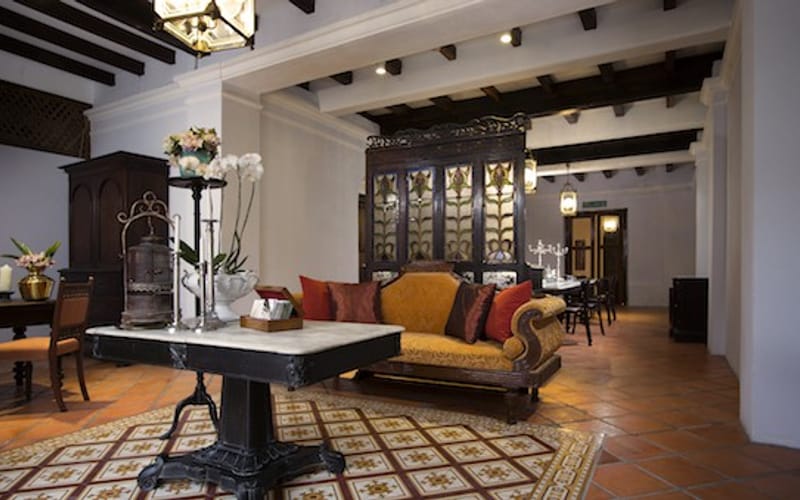
Jawi Peranakan Mansion
An 1870 Anglo-Mughal mansion on Penang's former Malay Millionaires Row
Transparency
Why This Score
How each of the nine Heritage Hotel Index dimensions was evaluated.
Heritage & Authenticity
40% of HHIReview pending
Review pending
Review pending
Guest Experience
35% of HHIReview pending
Review pending
Review pending
Operational Excellence
25% of HHIReview pending
Review pending
Review pending
About the Property
An Anglo-Indian mansion on Hutton Lane — once known as Malay Millionaires Row — built in 1870 to celebrate the Jawi Peranakan community, the Muslim descendants of Indian traders who married into Malay society and forged a distinct Penang identity. The property's Mughal-inflected arches, ornamental ironwork and Moorish window screens reflect a heritage that sits apart from both the Chinese shophouse and the British colonial building traditions of George Town.
Original Purpose
Private mansion on Malay Millionaires Row (Hutton Lane)
Highlights
History Timeline
Francis Light founds George Town; Indian Muslim (Chulia) traders among the earliest settlers intermarry with local Malay women, giving rise to the distinct Jawi Peranakan community.
The Jawi Peranakan community establishes a prominent presence on Hutton Lane, known locally as Malay Millionaires Row, as successful merchants build impressive Anglo-Indian Mughal-style mansions.
The grand private mansion on Hutton Lane is completed in the Anglo-Indian and Mughal style, featuring arched colonnades, ornamental plasterwork, and a formal reception hall reflecting its owners prominence.
Japanese occupation disrupts the Jawi Peranakan community; the Hutton Lane mansion is occupied by Japanese administrative personnel during the wartime years.
George Town UNESCO inscription brings renewed scholarly attention to the Jawi Peranakan heritage of Hutton Lane, one of the least-documented but most architecturally distinct communities in the city.
Jawi Peranakan Mansion opens as a heritage hotel dedicated to celebrating this unique community, with interiors curated to reflect the fusion of South Indian, Islamic, and Malay cultural traditions.