23 LoveLane
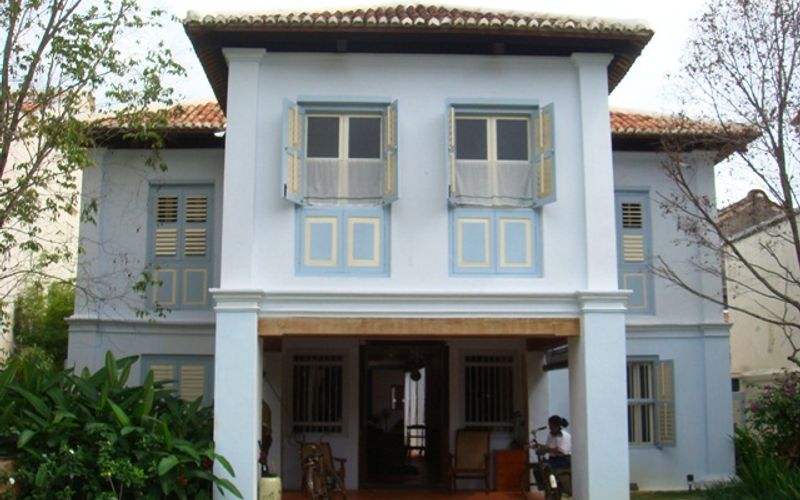
Anglo-Indian verandahs meet Straits Chinese tiles on George Town's LoveLane
Transparency
Why This Score
How each of the nine Heritage Hotel Index dimensions was evaluated.
Heritage & Authenticity
40% of HHIReview pending
Review pending
Review pending
Guest Experience
35% of HHIReview pending
Review pending
Review pending
Operational Excellence
25% of HHIReview pending
Review pending
Review pending
About the Property
Occupying an 1882 colonial residence on one of George Town's most storied laneways, 23 LoveLane weaves together Anglo-Indian verandah proportions and Straits Chinese decorative sensibility. Ornate ceramic floor tiles, carved timber screens and a light-filled inner courtyard speak to the cultural confluence that defines Penang's architectural identity — a street where history is lived rather than preserved behind glass.
Original Purpose
Colonial / Straits Chinese residence
Highlights
History Timeline
Captain Francis Light establishes a British trading settlement on Penang Island, triggering rapid growth of George Town and demand for merchant housing along its streets.
George Town becomes part of the Straits Settlements, attracting waves of Straits Chinese and European merchants who build residences along Love Lane and nearby streets.
A wealthy Straits Chinese family constructs the shophouse on Love Lane, blending Hokkien courtyard planning with British colonial verandah and Malay decorative tile motifs.
Japanese forces occupy George Town; the Love Lane residence is commandeered and used as administrative quarters during the three-and-a-half-year occupation.
George Town is inscribed as a UNESCO World Heritage Site, placing Love Lane within the core heritage zone and galvanising interest in sensitive restoration.
The building is meticulously restored and opens as 23 Love Lane boutique hotel, preserving original lime-plaster walls, timber fretwork, and hand-painted ceramic floor tiles.